Transcript
00:37It was 1913 when a new enterprise set out to develop and commercialize important innovations
00:44in fuse technology. In the early days of electrification.
00:48Fresh out of mit Joseph de loche, the company founder focused his attention on renewable
00:54fuses products that could easily and safely be changed in accessible fuse clips.
01:00The emergence of replaceable fuses so quickly taken for granted during the following years
01:05was a major safety innovation over the hand wound lead wire that would melt as a
01:10sacrificial weak link to protect early circuits from overload.
01:15His engineering efforts covered a wide range of power type plug type and glass automobile fuses,
01:22but it was his fascinating work with powder filling to quench or kill the ark within the
01:27fuse chamber that led to the company's name, Kill Ark.
01:35Early growth that was built on these innovations was good.
01:39But the outbreak of World war one had a disruptive impact on the fledgling enterprise,
01:44Joseph de Loge or JD, as he came to be known, made the decision to place his young company in
01:50the hands of family and friends and rechannel his zeal toward the war effort.
01:55It was a very personal commitment that led him to serve in the Medical Transport Corps of the
02:00French Foreign Legion.
02:03The surrogates he chose for the years he spent overseas, did not let him down and kept the
02:08company moving along.
02:13But in addition to its normal business, considerable plant capacity was reconfigured
02:18for the production of gas masks much needed for the war effort.
02:24By 1919, Kark had outgrown its start up location and moved to the much larger Turner
02:30Hall at what remains the company's current manufacturing address.
02:37Kark and its product lines continue to grow and prosper its range of glass fuses became a
02:44countertop commodity across industry and its well known automobile fuses were adopted as
02:50original equipment by the millions for General Motors Ford and other car manufacturers.
02:57The rising influence of safety policies being pursued by underwriters laboratories had an
03:02ever increasing effect on industrial wiring methods.
03:06The logic of using iron pipe to protect previously exposed conductors was being widely
03:11adopted and Kark matched those advances with the introduction of its electro l conduit
03:17fittings and dedicated purpose service entrance heads in the early 19 twenties.
03:28Not long after Kark developed its line of blue bell and white bell transformers that became so
03:34popular in residential use as electric doorbells found their way into so many homes.
03:41Even though the transformers have long been discontinued, home restoration specialists
03:45still come across the classic white and blue bells.
03:50The company was growing well, but it would be faced with another serious disruption.
03:55One that brought not only short term fears but also a long term threat to the organization.
04:01In 1925. A devastating fire overtook the old Turner Hall
04:06that had been home to Kark for the past six years.
04:09Early fire wagons were not sufficient to stem the blaze and the entire building was lost.
04:17Fortunately, no one was injured but the risk was high as some of the disabled workers who
04:22were part of the Kark team were led to safety.
04:28The prospects for the company were now in great jeopardy and critical decisions about its
04:33future were urgent but JD refused to back off his commitment.
04:38He set an immediate course to take up temporary quarters for the operation and started plans
04:43for a new building on the same site where Turner Hall had been reduced to ashes.
04:48The new single level building was designed and constructed on an accelerated schedule and
04:54represented a major step in the plans for the future growth of the company.
04:58The new structure incorporated modern operations theory and even included a robust
05:03structural system in anticipation of expansion that would bring additional levels to the
05:08building in coming years.
05:10Kark adapted to its new manufacturing home quickly and production flourished.
05:16But in September 1927 events would again impact smooth operations.
05:22A fierce tornado ripped through the neighborhood and while damage to kill Ak's
05:26facility was only moderate, the homes of nearby families and employees did not fare as well.
05:33The next several years were healthy ones but the company was not immune to the economic
05:37storm of the Great Depression that gripped the nation.
05:40But what was unusual at Kark was that JD refused to release loyal employees to the
05:46street as business contracted using personal resources.
05:50He managed to spread limited work to maintain the Kark team during this dark period.
05:57Through its first two decades, Kark relied on its technology and direct dealings to sustain
06:02sales and growth.
06:06But in 1934 the decision was made to adopt modern marketing techniques by adding agents,
06:12distributors and a widely circulated catalog.
06:16It then took only two years more before it became necessary to add a 2nd and 3rd floor to
06:21the factory.
06:30And by 1940 as the greatest generation took up arms in the second world war demands on
06:35industry to supply the effort became enormous,
06:42again converted part of its facilities. This time,
06:45it was to the manufacture of parachute couplings and components for artillery shells.
06:57The direct needs of the military consumed much of the nation's brass and iron foundry capacity
07:03and the raw materials to feed them.
07:06This made it difficult for the producers of brass and iron products including Kark to meet
07:12civilian demand.
07:17However, the company had already been exploring the novel idea of applying some of the inherent
07:22benefits of aluminum to its electrolyte conduit fittings.
07:26Klark saw this as a possible solution and chose to align its research with the unsatisfied
07:31demand caused by iron shortages.
07:34This was the introduction of the very first experimental line of aluminum conduit fittings.
07:41The success of this pioneering concept exceeded expectations.
07:45And the company's line of aluminum electrolytes or alumin lets was born,
07:51the range of products in aluminum continued to grow until the decision was made to convert for
07:56many years to come all production to aluminum including the development of future products.
08:02It was soon clear that the Kark innovation created an important trend that found
08:07essentially all major conduit fitting brands following with the addition of their own
08:11similar lines.
08:13In fact, the preference for aluminum became so strong in countless applications that today,
08:18many of the key product lines that grew from this revolution are available in no other
08:23material. The innovative style of its founder continued
08:29to guide Kark in an expanding range of new areas.
08:32The development of products for illuminating gasoline dispensing facilities or gas stations
08:38as they came to be called turned out to be a vital milestone for the company.
08:42This advance led to providing very specialized equipment for use where ordinary electrical
08:48devices could become a source of ignition for fire and explosion in the presence of escaping
08:53flammable gasses and vapors.
08:58Following the war. Kark was again able to redirect all efforts
09:01toward its industrial construction and OEM business.
09:05It was a time that also found Kark broadening its manufacturing base and exploring new
09:10markets. The company purchased foundry capacity that had
09:15been released from the production of cylinder heads for Sherman tanks as peace time took hold.
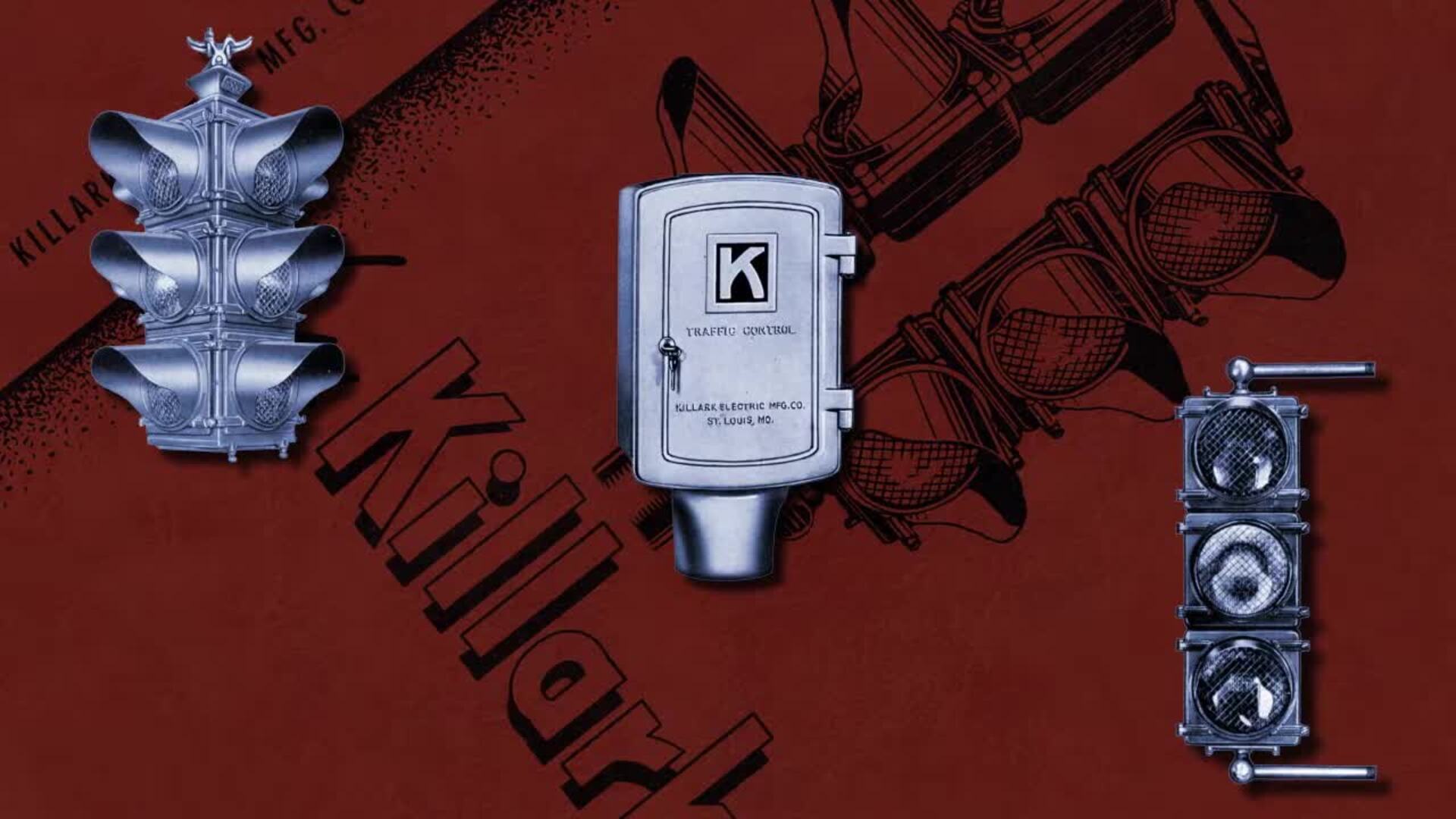
09:21Kark also entered the market for traffic signals but it was the continuing progress in
09:26the business for its electrical construction products, particularly demand for the company's
09:30explosion proof products for the petroleum industry that led to its concentrated
09:35commitment to that effort.
09:38In 1952 the company divested itself of traffic signals and sold its fuse business to the
09:44automotive division of a well known fuse manufacturer.
09:47All capacity was then recommitted to electrical construction products.
09:52The next 48 months saw a remarkable increase in capacity and capability all production at the
09:58foundry was absorbed. So a new efficient casting division was created
10:03in Louisiana, Missouri.
10:05An additional warehouse was erected at the main facility in Saint Louis to store the raw
10:10castings and machined products to add to the capability of the casting division.
10:16Atlas manufacturing in Sparta, Illinois was acquired and even a compression molding company
10:22was added to supply the needs of growing lines of hazardous location,
10:25plugs and receptacles and motor control.
10:29The sixties experienced exceptional demand for Clark's copper free corrosion resistant
10:34products. This led to further progression in Saint Louis
10:38and in 1966 in what turned out to be a bold news making step for the industry.
10:44Grace Hurst was named president of Kark becoming one of the first women to achieve this
10:49level of leadership.
10:51Kark continued to experience growth driven expansion of its facilities in Saint Louis,
10:56as well as the addition of operations in Canada international markets also began to represent
11:02an important share of business novel designs that were focused on making assemblies more
11:08adaptable and easier to customize. Right at the installation site became a part of
11:13the Kark philosophy. For instance, multi gang explosion proof
11:17control stations that could be configured for each application on the spot was a major step
11:22in providing remarkable field flexibility.
11:26By now, Clark's groundbreaking developments in products, employing copper free aluminum alloys
11:32had caught on in a big way.
11:34Key offerings and enclosures, motor controls, plugs, and receptacles,
11:38distribution equipment, lighting and fittings, all for hazardous locations had become major
11:44extensions of the original lightweight and corrosion resistant concepts introduced for
11:49entrance heads and conduit fittings, even instrumentation manufacturers with specialized
11:55needs for enclosures to accommodate their equipment came to Kark for the design and
11:59fabrication of dedicated housings in aluminum.
12:05Both specification and installation experience over many years had shown the adoption of
12:10aluminum for countless product lines to be a remarkable success for the industry.
12:16However, a very early but enduring article in the national electrical code intended to
12:21restrict the combination of brass and iron in raceway systems was worded too broadly and
12:27needed to be changed.
12:30In the early 19 seventies, Kark initiated a research project with Patel Columbus
12:35laboratories to provide independent scientific evidence that explained and reinforced the
12:40industry's exceptional experience.
12:43The success of that study led to essential changes in the nec that recognized the
12:48advancement that aluminum fittings had brought to conduit systems with the code change.
12:53Now, clarifying the article and eliminating the misinterpretation that had been lingering.
12:58Killerk was able to rec communicate the benefits of aluminum to those who had been
13:02reluctant to try it.
13:05The company's record, especially over this last decade attracted many corporate suitors but it
13:10wasn't until 1985 that the ideal match was achieved in May of that year.
13:16Kark became part of the Hubble family of companies.
13:19This was the beginning of a new and invigorating era for Kark.
13:24Even while retaining its original brand and character.
13:27The total support from Clark's new parent created an environment for accelerated growth
13:32and product development, technology investment, elevated operations and greater marketing
13:38presence helped the company gain even broader success for its achievements in products and
13:42service. For example, killer's remarkable ability to
13:46customize products and provide design assistance to meet application needs of its o
13:51ems industrial and construction users became an embedded part of its core mission.
13:56The adaptability of its enclosures and controls for hazardous locations is recognized as second
14:02to none. Innovative use of
14:09factory ceiling enabled advances in remote control stations that simplified installation
14:14and maintenance. Unique engineering approaches led to intermet
14:20ability benefits in blade type plugs and receptacles previously thought to be impossible.
14:26Advances in lighting equipment, piloted emerging technologies in hazardous locations
14:33enclosure development continued to introduce installation friendly advances.
14:38All the while resources directed towards sustaining the highest levels of service and
14:43response time remained strong.
14:46This included the development of programs dedicated to the struggles and uncertainties of
14:51urgent project schedules faced by many customers.
14:55The introduction of Vers mate plugs and receptacles that were developed and engineered
15:00specifically to address the demands of the oil and gas industry.
15:03Further cemented killer's long term relationship with the nation's essential need
15:08for energy. Soon after the acquisition by Hubble,
15:13Kark began to evaluate current trends in the electrical market and again,
15:17engaged with the writers of the national electrical code to introduce some of the newest
15:22and most advanced technology as additional options for treating hazardous locations.
15:28The new articles resulting from these efforts now made the American version of the zone
15:32system a practical alternative for those installations that would benefit from emerging
15:37worldwide standardization by integrating certifications in accordance with these global
15:43standards. Clark's position as the brand of choice for
15:46original equipment manufacturers continued the unfailing long term growth in the
15:53worldwide demand for energy has linked oil producer, processor and consumer nations in a
15:59constant quest for the best technology experience and service.
16:05The need for specialized electrical equipment in these hazardous locations has led to an ever
16:10increasing global role for Killar its product lines.
16:14Third party certifications, engineering and production capabilities along with its
16:18recognized service structure have provided a natural fit for the linking of world markets.
16:26The expanding call for harmonized technologies is more than a passing trend.
16:30Global transition toward IEC standards has not only become an important part of Kar's current
16:36responsibility to the industry but also a key element in its robust plans for the future.
16:44In fact, some of the most advanced manufacturing and testing technologies have
16:49been merged by Kark to provide high tolerance enclosures and controls that can meet both
16:54American and international harmonized standards.
17:03In recent years, the core of Kar's activity has been described as the dual mission of
17:08protecting the electrical system from the environment and protecting the environment from
17:13the electrical system.
17:15This simple but important statement of purpose has firmly positioned Kark as the foundation of
17:20a growing branch of Hubble's business known as harsh and hazardous.
17:24The inclusion of Chal Victor lighting, Gron Hawk.
17:28And most recently, the Kark acquisition of vantage technology has highlighted this
17:33critical segment.
17:37The remarkable motivators that make up the fabric of Kar's past are still weaving its
17:42future. There are
17:49moments when a century seems to be an unimaginable span of time.
17:53Yet there are retired employees and even a small group of current employees who came to
17:59Kark when the hand of its founder was still a guiding force.
18:03The organization that grew from those early advancements and fuses never lost its passion
18:08for excellence and innovation and continuing its commitment to growth and service for the
18:15next century.

Killark at 100 (extended version)
- private