Transcript
00:09Conveyor systems are widely used in a variety of manufacturing environments.
00:13From food packaging and bottling to automotive printing and pharmaceutical facilities.
00:19In fact, conveyor systems are what keep North American industries moving.
00:23Hubbell's new circuit lock motor disconnect switches designed for use with variable
00:28frequency drives are a must have for today's conveyor systems.
00:32The most common means of controlling today's conveyor motors is a variable frequency drive
00:37or VFD.
00:38These effective controllers adjust the speed torque direction and horsepower of conveyor
00:43system motors for maximum flexibility, reliability and energy savings.
00:48VFDs accomplish this by using high performance output devices to switch power on and off at
00:53specific intervals to create an efficient variable ac waveform.
01:00In industrial manufacturing environments. The national electric code or nec requires all
01:06motors to have a means of disconnect within line of sight of the motor and driven equipment.
01:10This allows the motor to be easily shut down for maximum safety and to enable maintenance is
01:15needed. Hubbell's circuit lock, disconnect switches are
01:19UL listed as a manual motor controller and motor disconnect to meet code requirements.
01:24The switch is placed in a UL type 4X safety enclosure and features a high visibility red
01:29handle using a standard disconnect switch between your VFD and motor loads has several
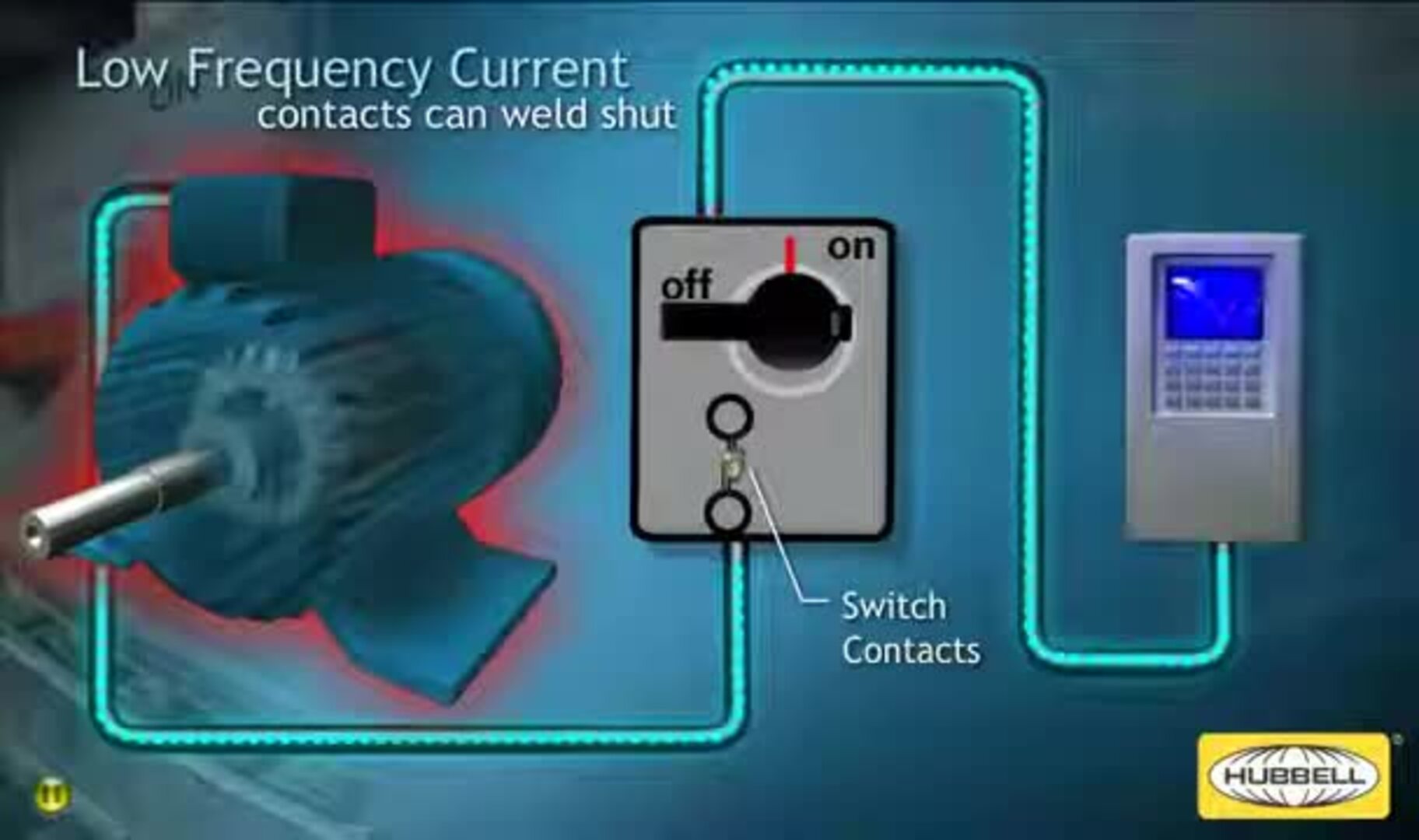
01:35inherent problems. VFD drive systems produce frequencies outside
01:40of the operating range of a standard switch interrupting and reconnecting power from the
01:45VFD to an active drive motor with a disconnect switch can potentially cause the switch
01:49contacts to weld shut.
01:51This can prevent the switch from properly and safely cutting off power which could result in
01:56risk of injury to personnel.
01:58In addition, if a disconnect switch is turned off while the drive is operating,
02:02power will be removed from the motor. However, the drive will continue to supply
02:06power to the disconnect switch. This condition can damage the VFD output
02:10devices causing downtime and expensive repairs.
02:14Hubbell has innovated a solution to these issues.
02:18Hubbell's improved 30 amp circuit lock motor disconnect switch for use with VF DS
02:22incorporates an early break auxiliary contact that enables VFDs to execute a coast to stop,
02:29preventing any damage to the disconnect switch and the VFD output devices.
02:34How does it work? The early brake auxiliary contact in a circuit
02:38lock enclosure is wired up to the digital input of the VFD.
02:43When turning off power to a motor, the early brake contact sends a signal back to the VFD.
02:48When the circuit lock handle is rotated to approximately 10 to 15 degrees,
02:53the signal enables the VFD to execute a coast to stop,
02:56preventing damage to the VFD. And the disconnect switch the power contacts on
03:01the circuit lock disconnect switch don't start to open until the red handle reaches
03:05approximately 40 to 45 degrees.
03:08The delay between the signal being sent to the VFD and the contacts opening is designed to be
03:13long enough to safely disable the drive. The early brake auxiliary contacts pre
03:18installed in the circuit lock disconnect switch prevents possible problems when used with VFDs.
03:24The early brake auxiliary contact device can also be purchased separately and easily
03:28installed on existing circuit lock motor disconnect switches in the field.
03:33The new circuit lock motor disconnect switch for use with VFDs from Hubbell is one of the
03:37only switches available that has been thoroughly tested to ensure maximum safety and
03:42prevent switch damage keeping today's industrial conveyor systems moving.

WDK CircuitLock Disconnect for Variable Frequency Drives
- private